
Yoga Foundations: Mastering the Breath (Pranayama)
Yoga Foundations: Mastering the Breath (Pranayama)
Active Star
10/22/20252 min read
The Essence of Yoga: Mastering the Breath (Pranayama)
While the visible, impressive physical postures (known as asanas) often capture the attention of beginners, the true, profound foundation of yoga is actually built upon Pranayama, the disciplined practice of breath control.
Pranayama is far more than just breathing; it is the conscious regulation of prana (life force energy) through the breath. This practice is essential for grounding your entire yoga journey because it directly influences your autonomic nervous system. Learning to breathe deeply, smoothly, and consciously is the most effective tool you have for:
Calming the Nervous System: It activates the parasympathetic "rest and digest" system, immediately reducing stress, anxiety, and the body's fight-or-flight response.
Improving Focus and Clarity: Steadying the breath steadies the mind, preparing you for meditation and allowing for deeper concentration during physical poses.
Increasing Lung Capacity: Consistent, full breathing patterns maximize oxygen exchange, benefiting your overall vitality and stamina.
Even a few minutes of dedicated breathwork can bring an immediate and noticeable sense of grounded tranquility to your daily life, making it the most valuable preparation for any physical yoga practice.
Foundation Practice: Dirga Pranayama (The Three-Part Breath)
The Three-Part Breath, or Dirga Pranayama, is the perfect foundational technique to start your breath mastery. It systematically teaches you to utilize your full lung capacity.
Step 1: Find Your Posture and Center
You can practice this lying down (which is ideal for beginners) or sitting upright in a comfortable position.
Action (Lying): Lie on your back with knees bent and feet flat on the floor (or straight out). Place one hand on your belly and the other on your ribcage.
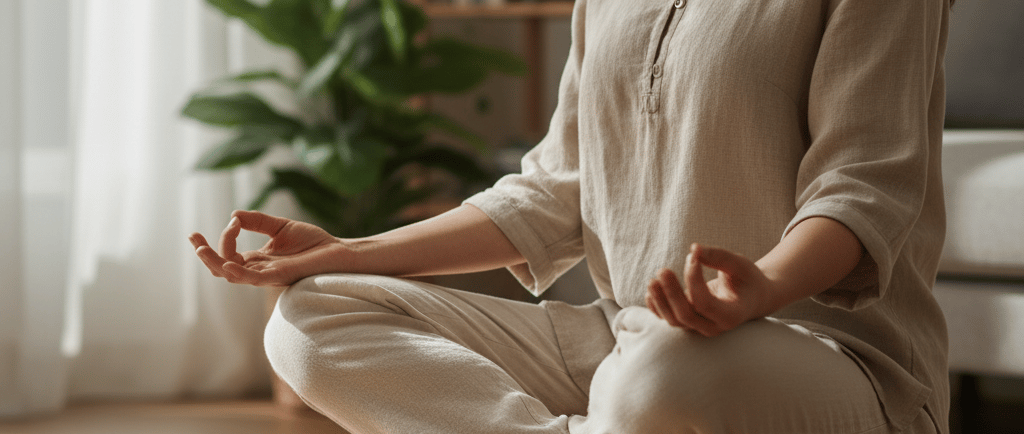
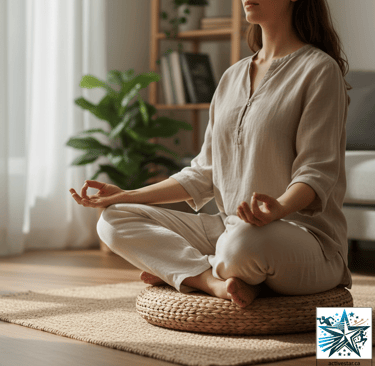
Action (Sitting): Sit tall with a straight spine, shoulders relaxed, and your chin slightly tucked. Close your eyes gently to minimize distraction.
Action (Mindset): Take a moment to simply observe your natural, spontaneous breath without trying to change it.
Step 2: The Inhale: Fill the Three Chambers
The goal is to inhale smoothly and continuously, like filling a glass of water from the bottom up.
Chamber 1 (Abdomen): Inhale deeply through your nose, letting the breath fill the lowest part of your lungs first. Feel your belly hand rise as the abdomen gently expands outwards.
Chamber 2 (Ribs): Continue the inhale, allowing the breath to expand the middle of your lungs. Feel the air moving your ribcage outward to the sides and front.
Chamber 3 (Chest): Complete the inhale by filling the uppermost part of your lungs. Feel a slight lift and expansion in your upper chest and collarbones.
Step 3: The Exhale: Empty in Reverse Order
The exhale should be just as smooth and complete, emptying the air from the top down.
Chamber 3 (Chest): Start the exhale by letting the air gently fall from your upper chest.
Chamber 2 (Ribs): Continue to exhale, drawing the ribs softly inward.
Chamber 1 (Abdomen): Finish the exhale by gently drawing your navel in toward your spine to push out the very last bit of air. Your belly hand should fall back toward the floor.
Step 4: Establish Your Rhythm
Practice linking the inhale and exhale into one continuous, flowing cycle. Aim for a long, slow, and soft breath—avoiding any harshness or straining.
Action: Practice 10-15 cycles of Dirga Pranayama daily. If lying down, you may notice a deep sense of relaxation that leads to sleep.
Action: Before transitioning to physical asanas, spend five minutes doing this breathwork. It will ensure your body and mind are connected, making the poses feel more integrated and effective.
Commitment: Commit to practicing the Three-Part Breath for five minutes immediately upon waking, or right before going to sleep. This simple dedication will build the strongest foundation for your entire yoga practice.