
Meal Prep for Beginners: Setting Yourself Up for Success
Meal Prep for Beginners: Setting Yourself Up for Success
Active Star
11/7/20253 min read
Meal Prep for Beginners: Your Blueprint for a Stress-Free, Healthy Week
The gap between wanting to eat healthy and actually doing it is often filled with busy schedules, low energy, and last-minute decisions. Meal prepping is the strategic solution that bridges this gap. It is not about spending your entire Sunday in the kitchen or eating the same bland chicken and broccoli for seven days straight. Instead, it's about smart, efficient planning to make healthy eating the easiest choice throughout your week.
By investing a small amount of time upfront, you buy yourself a week of reduced stress, saved money, and the profound satisfaction of knowing you are fueling your body well, even on your most chaotic days.
Your Action Plan: The 4-Step Beginner's Guide to Meal Prep Success
Follow this framework to build a sustainable meal prep habit that works for your life.
Step 1: Plan & Simplify – The "Why" and "What"
A successful prep starts with a clear plan, not in the kitchen. Overcomplicating this step is the number one cause of failure.
Start with ONE Meal: Don't try to prep breakfast, lunch, dinner, and snacks all at once. Choose the meal that causes you the most trouble during the week. For most people, this is lunch or weeknight dinners.
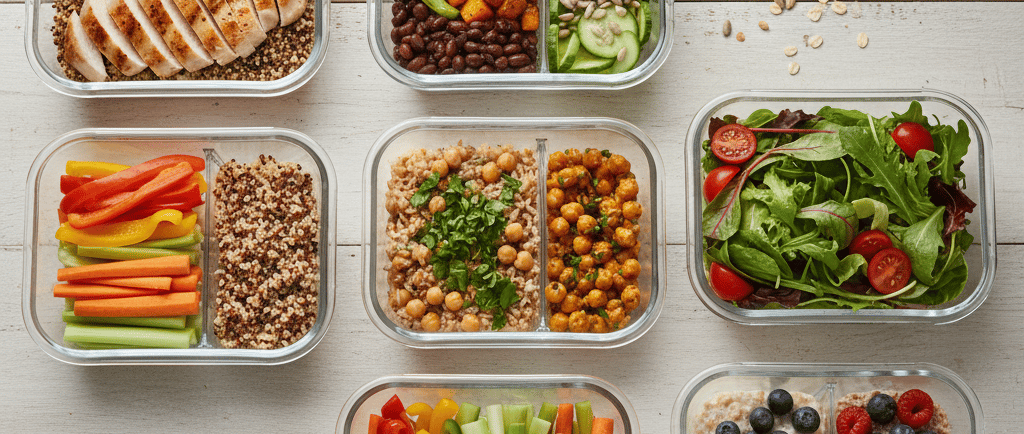
Keep Your Menu Simple: Choose 1-2 simple recipes you already know and enjoy. Think in components, not full plates. A great starter formula is: Protein + Complex Carb + Veggies + Healthy Fat.
Write Your Shopping List: Based on your simple menu, create a precise shopping list. This prevents impulse buys and ensures you have everything you need.
Step 2: Equip & Execute – The "How"
Efficiency in the kitchen comes from having the right tools and a smart workflow.
Gather Your Gear: You don't need fancy equipment. Essentials include:
Quality Containers: Invest in a set of reusable, leak-proof glass or BPA-free plastic containers in various sizes.
Sharp Knives & a Large Cutting Board: For safe, efficient chopping.
Large Sheet Pans & Pots: For batch-cooking.
The "2-Hour Power Hour" Strategy:
Wash & Chop (20 mins): Start by washing and chopping all your vegetables for the week. Store them in airtight containers.
Batch-Cook Your Bases (60 mins): This is where the magic happens. Simultaneously:
Roast Veggies: Toss chopped vegetables (broccoli, bell peppers, sweet potatoes) in oil and spices and roast them on a sheet pan.
Cook Grains: Make a large batch of quinoa, brown rice, or farro on the stovetop.
Cook Protein: Bake chicken breasts, grill tofu, or simmer lentils.
Assemble & Portion (20 mins): Let components cool, then portion them into your containers. You can create full meals or keep components separate for mix-and-match flexibility.
Step 3: Store & Organize – The "Where"
Proper storage is critical for food safety and maintaining freshness.
The First-In, First-Out Rule: Place newly prepped food behind older food in the fridge. This ensures you use everything before it spoils.
Smart Storage:
Let Food Cool before putting lids on containers to prevent condensation (which makes food soggy).
Store Dressings & Sauces Separately to keep salads crisp and grains from getting mushy.
Label Containers with the date to track freshness.
Freeze for the Future: If you've made a large batch of something like soup or chili, immediately portion and freeze half of it for a future "emergency" meal.
Step 4: Maintain & Adapt – The "Long Game"
Meal prep is a habit that gets easier and more intuitive over time.
Reflect & Refine: At the end of the week, ask yourself: What did I actually eat? What went to waste? Use these answers to adjust your quantities and choices for the next week.
Embrace the "Mix & Match": Avoid boredom by prepping components you can combine in different ways. Roasted chicken can be a salad topper, a taco filling, or mixed into a grain bowl with different sauces.
Celebrate the Win: Acknowledge the time, money, and stress you've saved. This positive reinforcement is what will make you want to do it again next week.
The Bottom Line:
Meal prepping is a practical act of self-care. It is a system that removes the daily guesswork from healthy eating, freeing up your mental energy for the things that matter most. By starting small, keeping it simple, and focusing on consistency, you build a powerful habit that supports your health goals and simplifies your life, one prepared container at a time.